Engineering Efficiency: Reducing Design Debt & Production Cost
When I joined Best Buy as the solo designer on a newly formed newsletters team, I spent time with PMs, creative directors, art directors, marketers, and merchandisers to understand the existing workflow. The setup was straightforward on paper — merchandisers submitted product information two weeks before launch, designs were created, then sent for localization and handed off to an outsourcing partner for implementation.
As volume grew, the process started showing some gaps.
Fragmented Feedback & Rising Costs
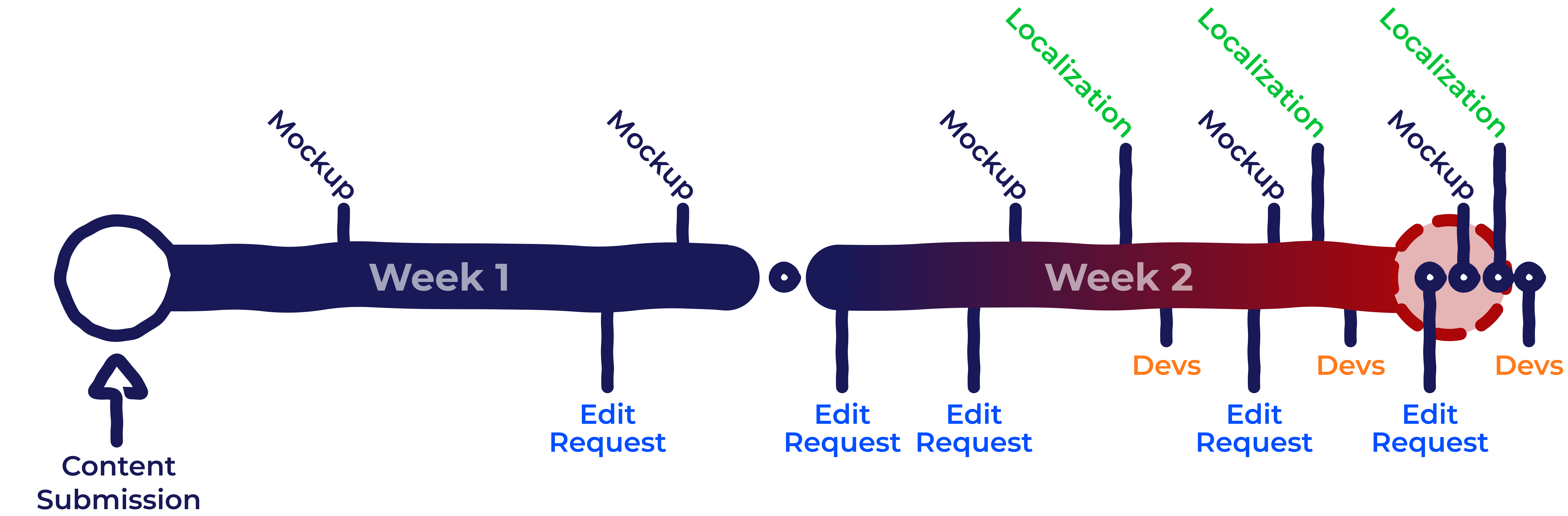
Last-minute edit requests were coming in through scattered emails, calls, and chats — often overlapping with final development. Each revision round sent to the outsourcing agency added cost, and the unpredictable workload was creating unnecessary pressure on the team.
The core issue was a lack of structure around feedback and communication.
Process
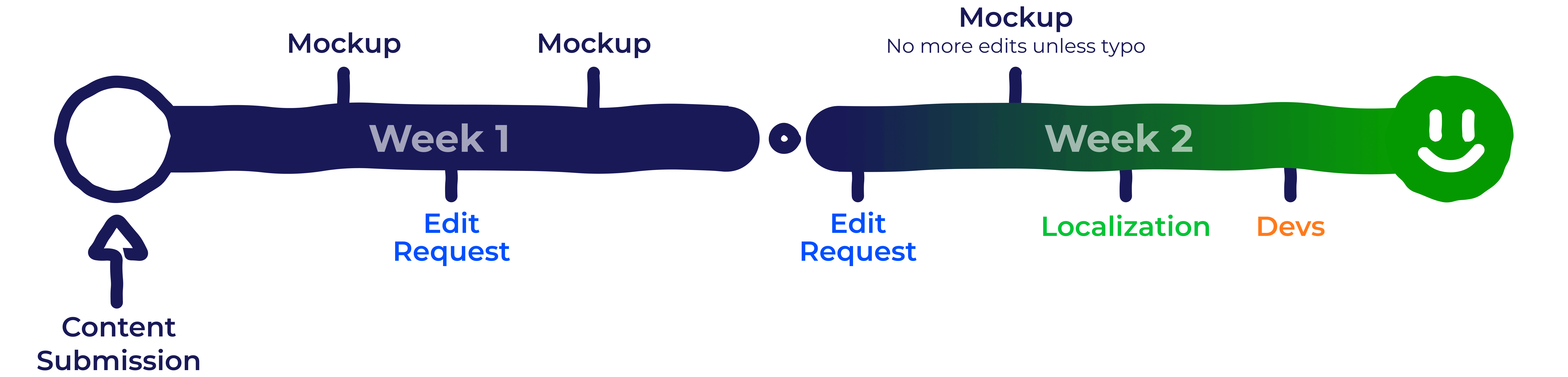
I proposed a two-week sprint system, supported by an online proofing tool that centralized all feedback in one place.
Week 1 — Merchandisers submitted content, designers created mockups, and stakeholders gave consolidated feedback in a single scheduled review meeting.
Week 2 — Only typo-level edits were permitted. Mockups went to localization, then final assets were handed off to developers.
Feedback submitted outside the proofing tool wasn't accepted. Getting cross-functional teams on board took some adjustment — to help with the transition, we tracked the source and timing of edits and held retrospectives every two newsletter cycles. This helped surface patterns and gave us a basis for improving the process over time.

Outcome
Increased productivity by 50% and reduced production costs by roughly 30%, driven largely by fewer revision rounds with the outsourcing agency. Last-minute changes didn't disappear entirely, but their frequency dropped noticeably. The overall workflow became more predictable for everyone involved.
Reflection
This project was a good reminder that design thinking can extend beyond visual deliverables. Structuring how a team collaborates has its own set of challenges — stakeholders, constraints, and tradeoffs — and finding a system that worked for everyone was as much a part of the job as the design work itself.