0 -> 1 Product Design: Engineering My Own Concussion Recovery
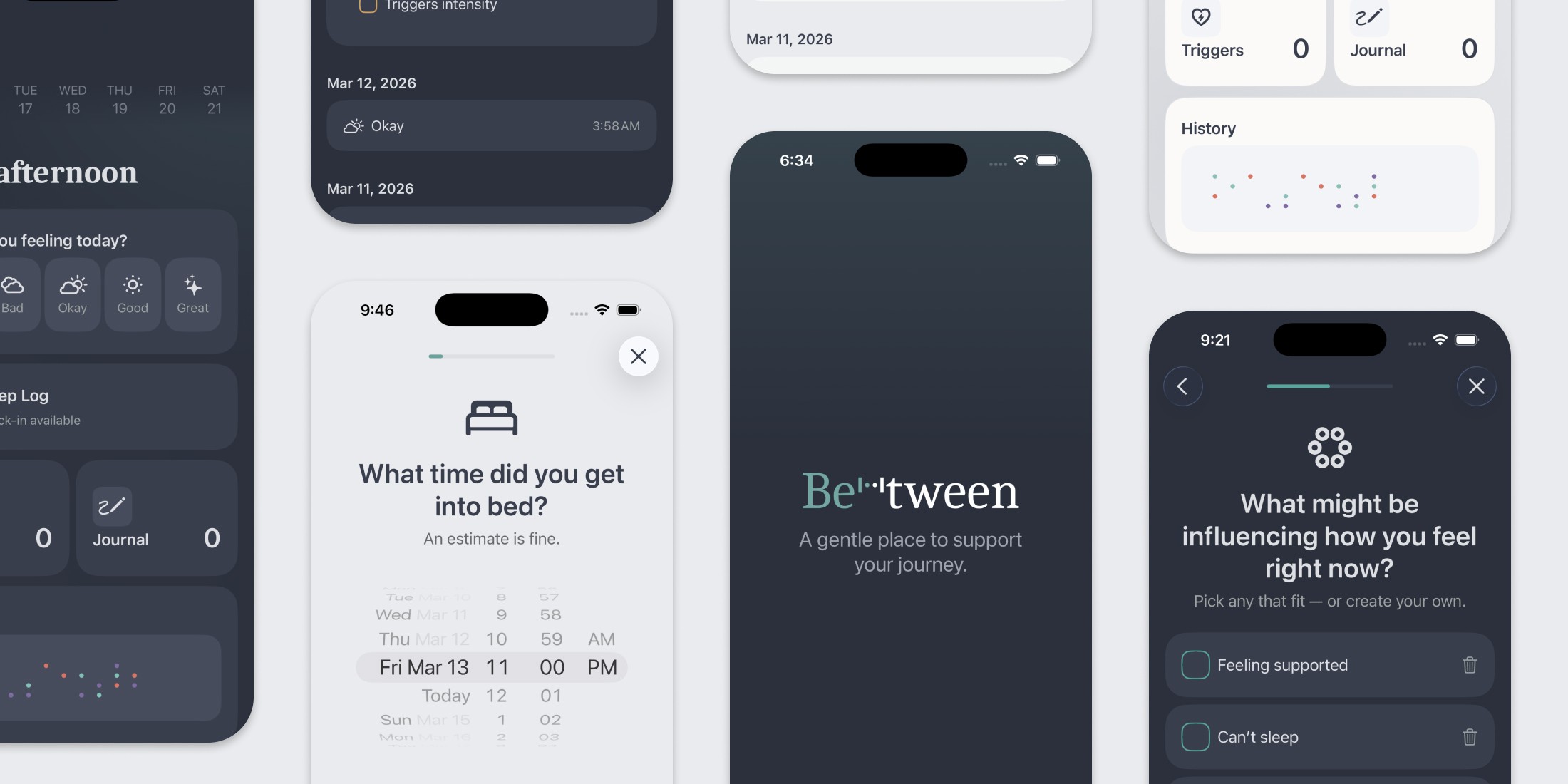
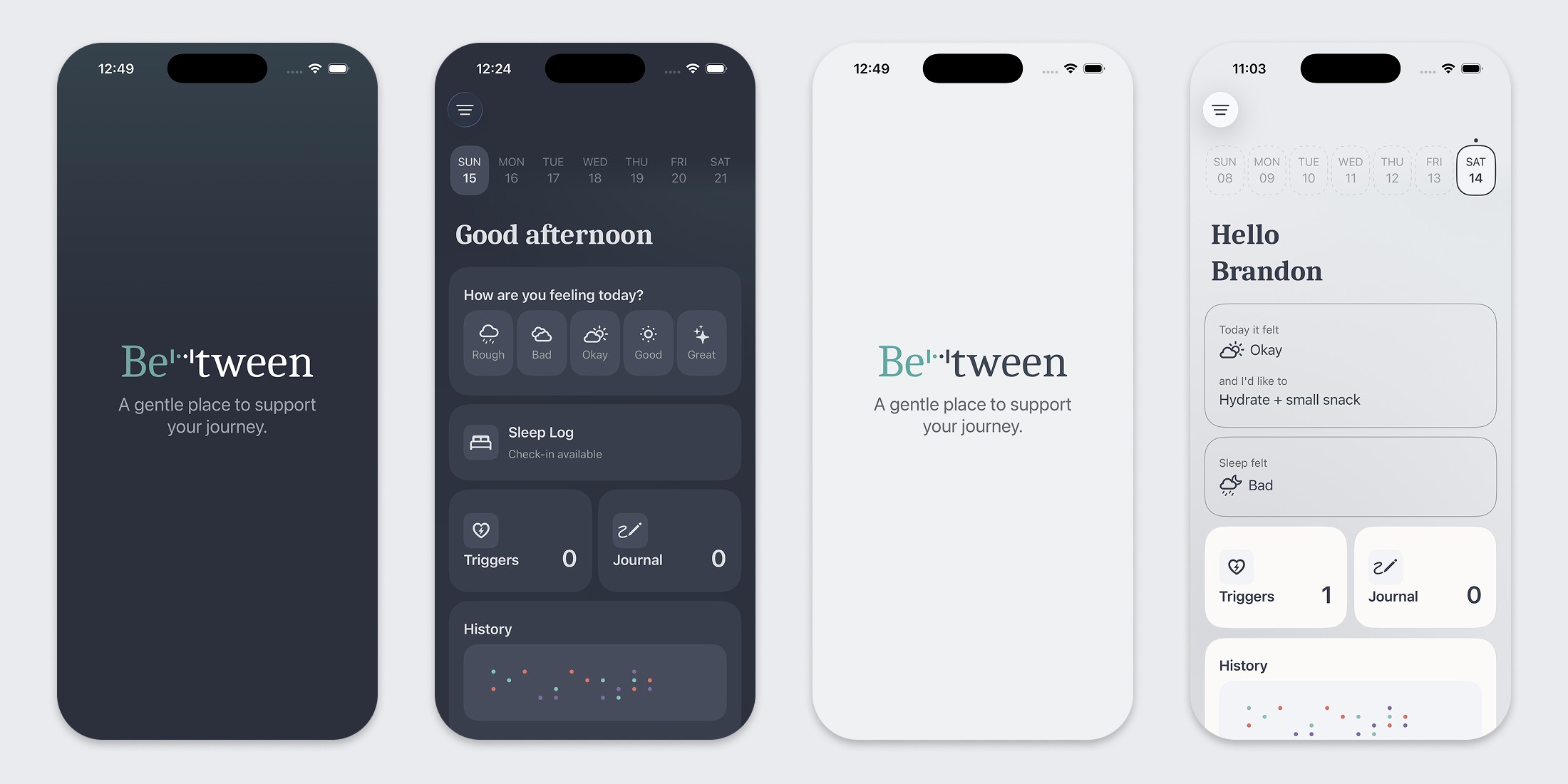
Between is a mobile recovery-tracking app I designed and built after my 4th concussion.
Problem
Concussion recovery is difficult to track.
Recovery is non-linear. Symptoms fluctuate, and many important signals—fatigue, light sensitivity, mood, cognitive load—are subjective and easily forgotten. Without structured tracking, clinicians spend valuable appointment time reconstructing patient history instead of identifying patterns and adjusting treatment.
Most health apps and wearables capture quantitative data, but they miss the lived experience of recovery.
Insight
Clinicians don’t need more device data — they need clearer patient context.
A structured record of symptoms, sleep quality, activities, and mood provides far more useful context than fragmented memory or wearable metrics alone.
Designing for the Actual User
As both designer and primary user, I built the product under the exact constraints it needed to solve. Tracking prompts mirror the language used in concussion assessments and intake forms from my medical appointments.
I also consulted occupational therapists to ensure the captured data aligned with how clinicians evaluate recovery and identify treatment adjustments.
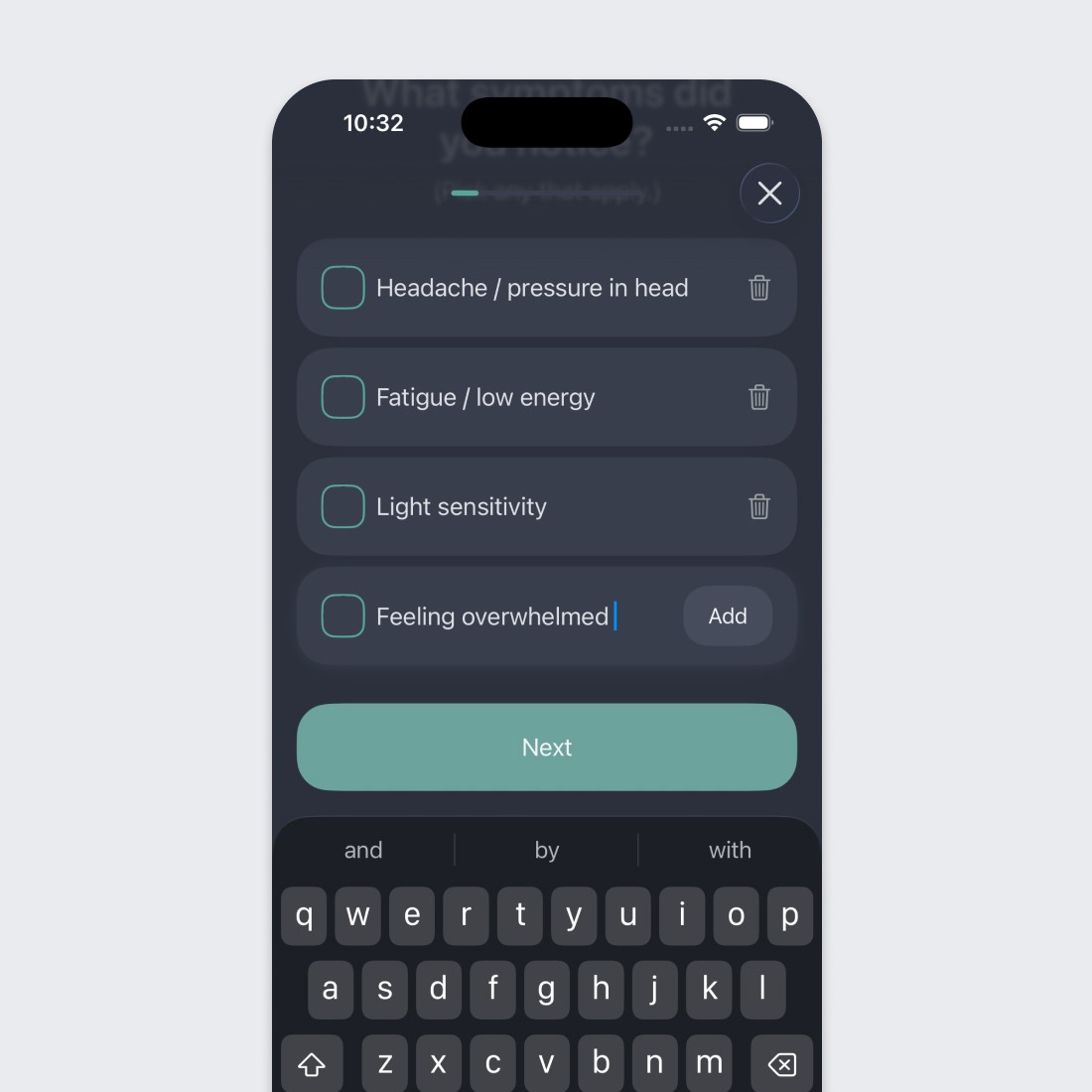
Dark-mode
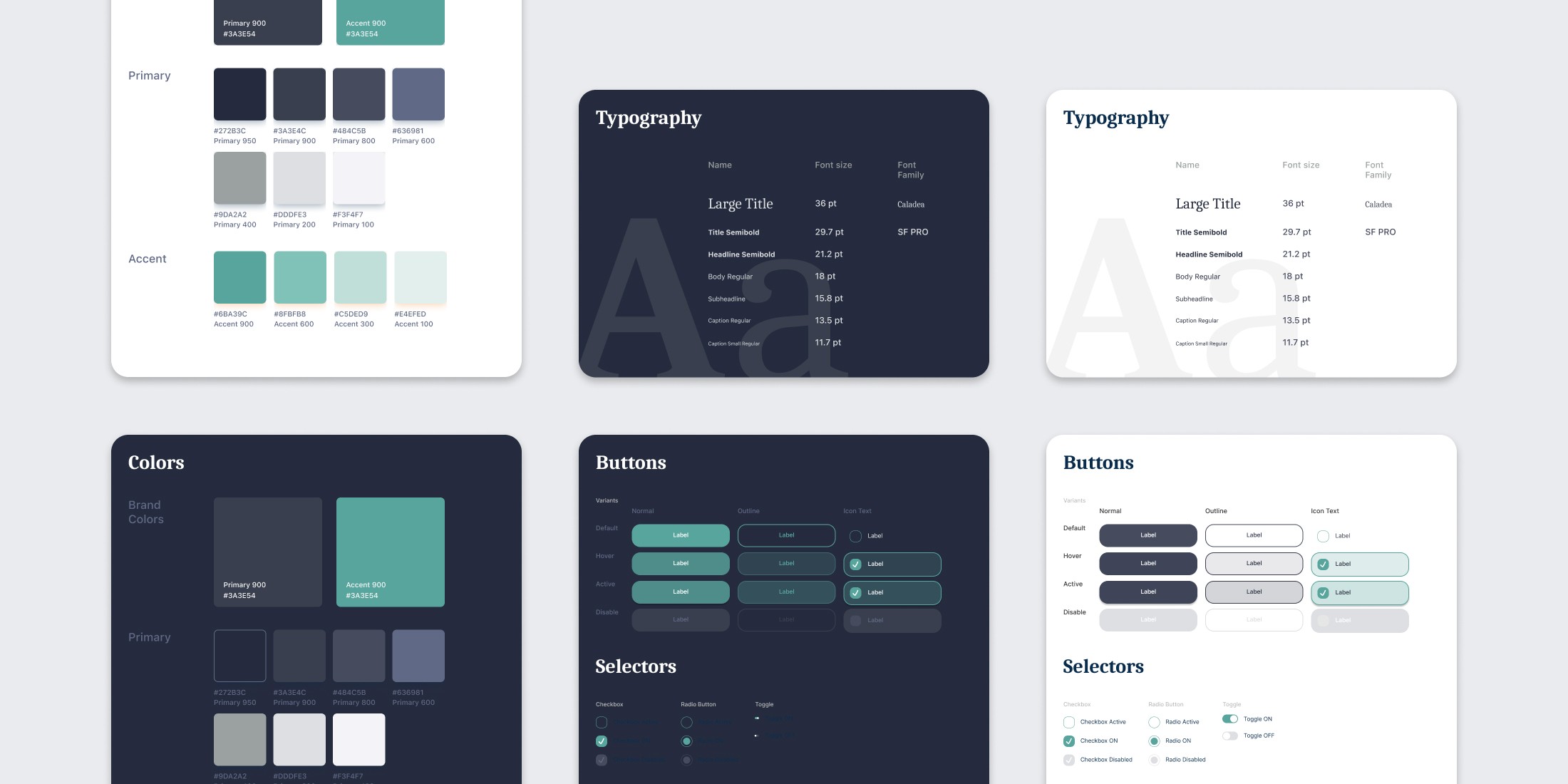
Light sensitivity is a common concussion symptom. The interface was designed with a high-contrast, low-glare system from the ground up. Brightness and visual noise were treated as accessibility constraints rather than aesthetic preferences.
Adaptive, Patient-Centered Tracking
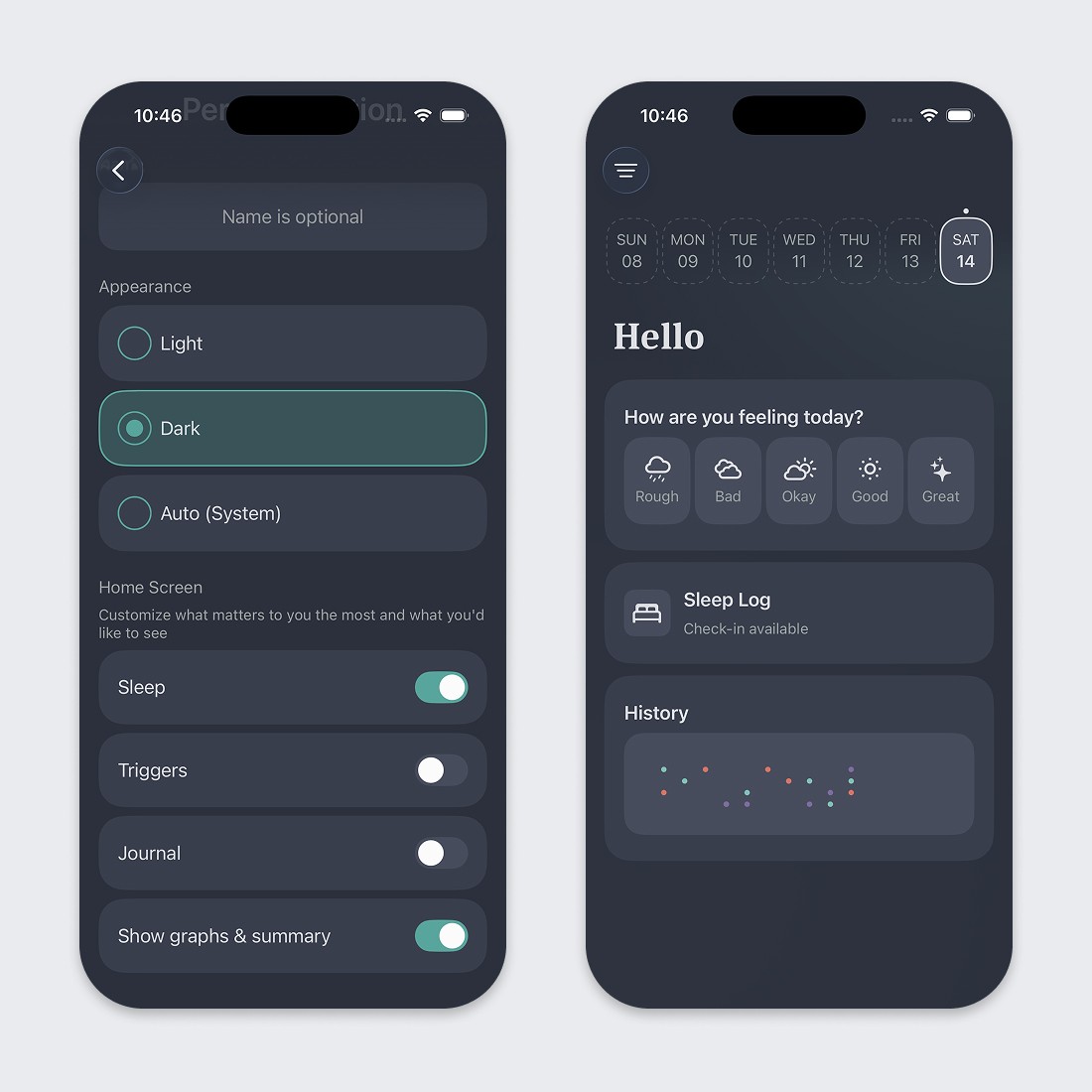
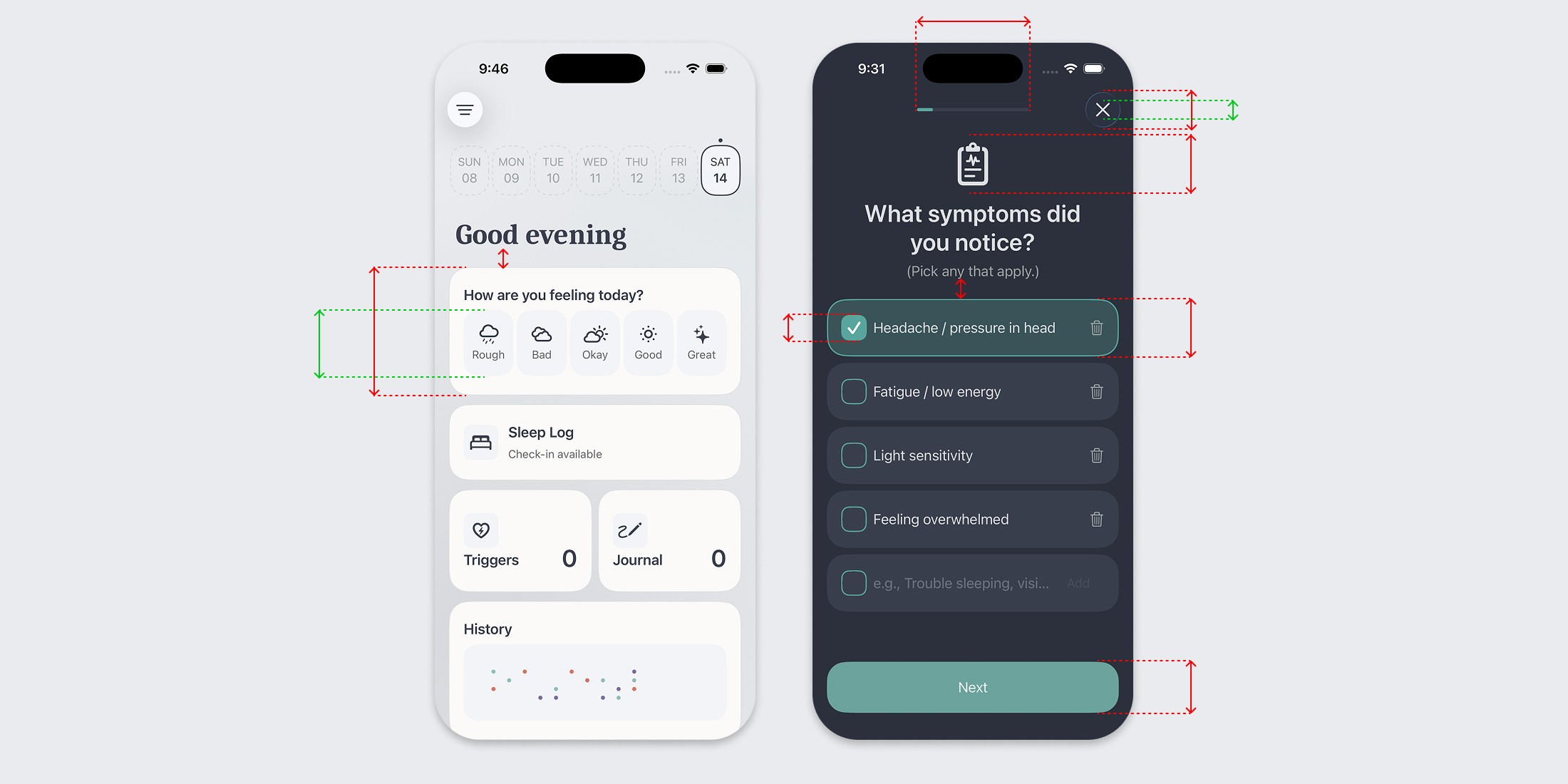
Concussion recovery varies widely from person to person, so the tracking system is modular. Users choose what they monitor—symptoms, activities, sleep, and mood—allowing the app to adapt to individual recovery patterns.
Sleep tracking focuses on the patient’s perceived sleep quality rather than wearable metrics. During concussion recovery, clinicians often find subjective experience more useful than device data when evaluating patterns and triggers.
Low cognitive-load navigation
Large tap targets, minimal motion, and a simplified information hierarchy ensure the app remains usable on difficult days—not just when symptoms are mild.
Data Export
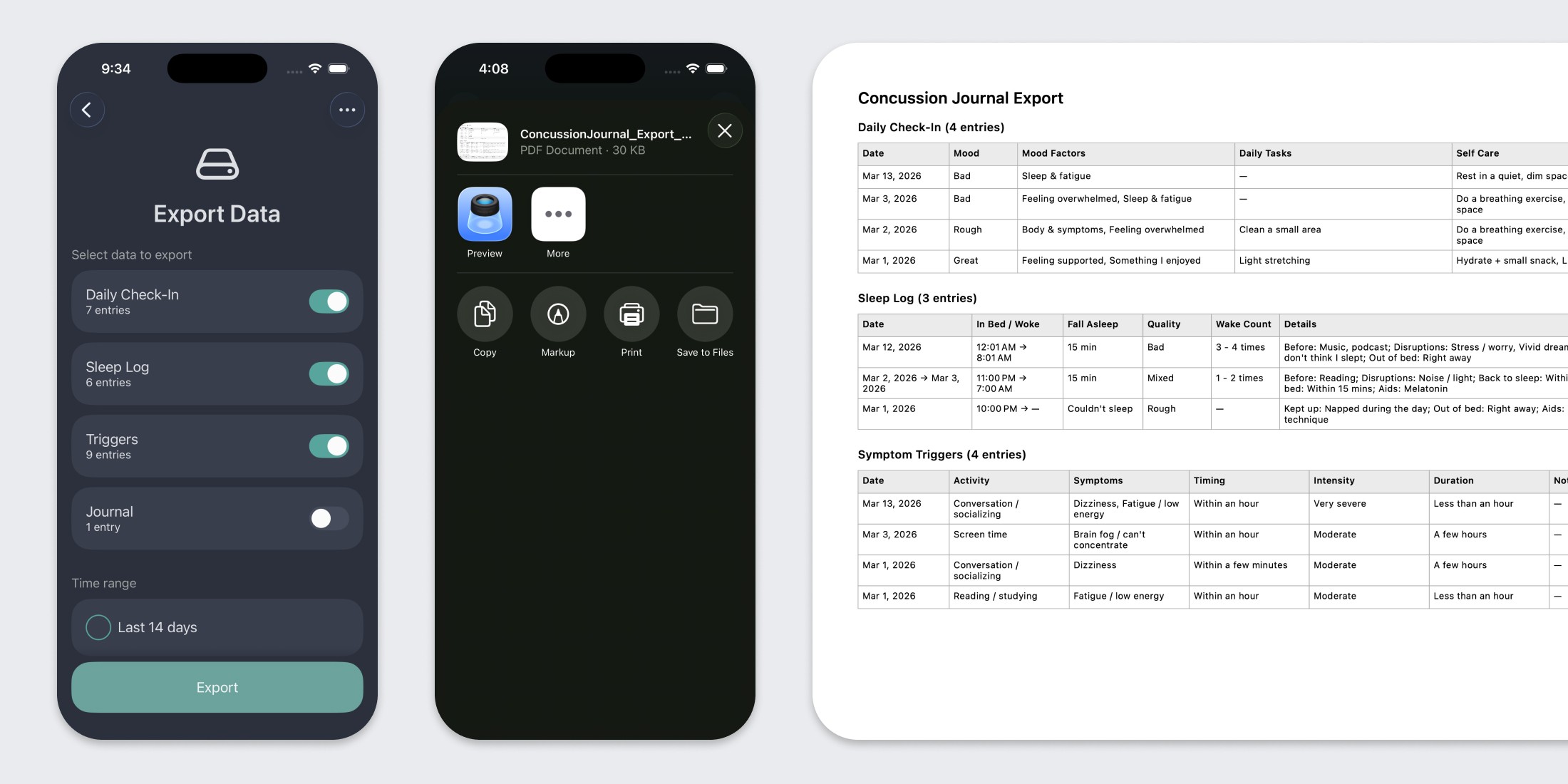
To support clinical conversations, I designed a one-tap export that generates a structured recovery report.
Instead of relying on memory, clinicians can review a clear timeline of symptoms, sleep quality, activities, and mood patterns. Reports can be shared with healthcare providers or retained for personal records.
Building with AI-Assisted Development
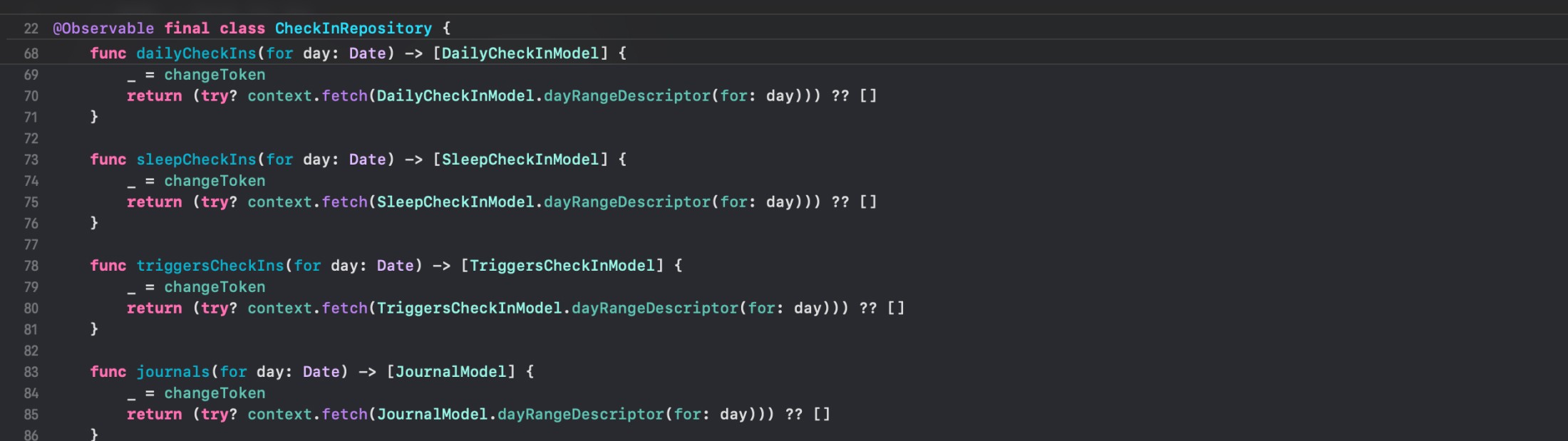
Without an iOS development background, I used AI-assisted development tools—including Claude and ChatGPT—to translate design concepts into a working product.
By iterating directly from mockups and interaction descriptions, I was able to move quickly from design to functional prototype while evaluating UX trade-offs during development.
Outcome
I used Between throughout my own recovery, providing my healthcare team with a consistent record of symptoms and patterns between appointments.
The occupational therapists I consulted noted that even one to two weeks of structured tracking before an initial session would significantly improve their ability to assess a patient.
Between is currently awaiting approval on the Apple App Store for iOS.
Reflection
Designing for neurological symptoms reframed how I think about accessibility.
In many products, accessibility is treated as a checklist—contrast ratios, tap target sizes, compliance guidelines. Designing for someone actively experiencing cognitive and sensory limitations made it clear that accessibility can be the entire product.